
Dana Schröder · 23 September 2026
Navigating Hidden Pathways in Web Performance Optimization for Emerging Digital Platforms
Emerging digital platforms continue to expand beyond traditional websites into areas such as progressive web applications, immersive interfaces, and interconnected device ecosystems, and performance optimization requires attention to routes that extend past standard recommendations. Data from industry reports show that load times influence user retention across these platforms, with measurements indicating that delays beyond three seconds correlate with measurable drops in engagement metrics.
Defining Hidden Pathways in Performance Contexts
Hidden pathways refer to optimization methods that operate beneath surface-level adjustments, including nuanced handling of resource prioritization under fluctuating network conditions and adaptive delivery systems that respond to device-specific constraints. Researchers at various academic institutions have documented how these approaches yield improvements in metrics such as time to interactive and cumulative layout shift when applied to newer platform architectures.
One study revealed that platforms integrating edge-based computation alongside traditional server responses achieved faster content rendering in regions with inconsistent connectivity, and observers note that such strategies often involve layered caching mechanisms that anticipate user navigation patterns without explicit preloading commands.
Key Factors for Emerging Platform Architectures
Platforms built for augmented interfaces or distributed IoT environments encounter variables that standard desktop optimization overlooks, and evidence suggests that accounting for these variables early in development alters overall efficiency outcomes. Figures from global performance monitoring services indicate that adoption of protocols like HTTP/3 has accelerated in certain markets since 2024, with deployment rates climbing in enterprise settings by September 2026.
Those who have examined platform growth patterns find that integrating asynchronous data fetching with background synchronization reduces perceived latency, particularly when multiple device types access the same content streams simultaneously. This holds true across geographic regions where infrastructure varies widely.
Techniques That Operate Below Common Thresholds
Advanced resource hinting combined with speculative prefetching forms one pathway that delivers gains without increasing initial payload sizes, and developers who apply these methods report tighter control over bandwidth allocation during peak usage periods. Another approach centers on selective compression algorithms that adapt based on content type rather than applying uniform settings across all assets.
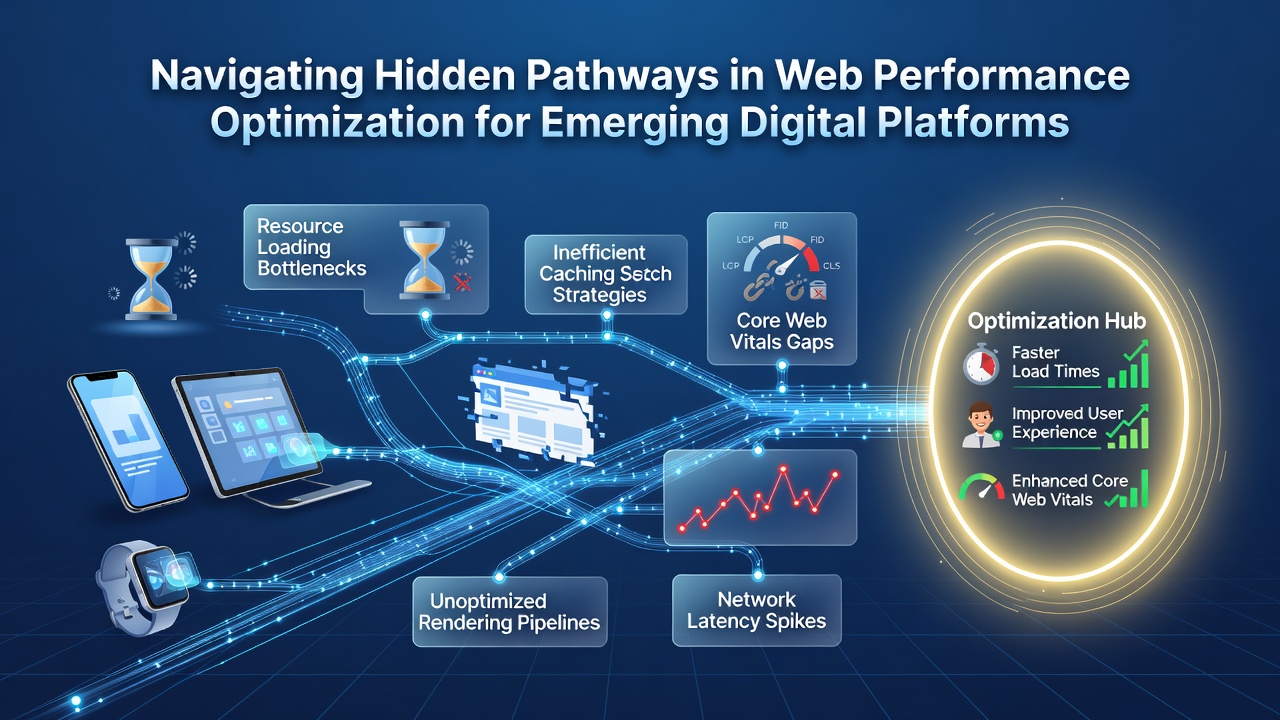
Research indicates that monitoring real-user metrics over synthetic tests uncovers discrepancies that affect emerging platforms disproportionately, and organizations tracking these differences adjust delivery strategies accordingly. According to analyses from the Government of Canada digital services reports, performance benchmarks shift notably when platforms scale across mobile-first environments in diverse network conditions.
Integration with Adaptive Systems
Emerging platforms frequently incorporate machine learning elements for content personalization, and performance optimization in these cases extends to minimizing the computational overhead of model inference at the edge. Data shows that offloading certain processing tasks to nearby nodes maintains response consistency, while centralized approaches introduce variability that compounds during high-traffic intervals.
People who have implemented such hybrid setups observe that combining client-side prioritization rules with server-side decision engines produces measurable reductions in error rates under load, and this pattern appears consistently in reports covering both European and Asia-Pacific deployments.
Measurement Approaches That Reveal Overlooked Data
Standard tools capture core web vitals effectively, yet deeper pathway analysis requires extended logging that tracks interaction sequences across sessions rather than isolated page loads. Evidence from performance research groups demonstrates that session-level aggregation exposes bottlenecks tied to third-party script interactions, which become prominent in platforms relying on external service integrations.
Turns out that correlating these logs with geographic latency maps allows for targeted adjustments that standard averages miss, and organizations applying this layered measurement see sustained improvements in retention statistics through 2026.
Conclusion
Hidden pathways in web performance optimization for emerging digital platforms center on adaptive techniques, nuanced measurement, and protocol-level refinements that align with evolving platform requirements. Research from sources including the HTTP Archive project continues to supply data that informs these strategies, and implementation across varied environments underscores the value of addressing factors beyond initial load sequences. Observers tracking developments into September 2026 note ongoing refinements in how these methods scale with new interface paradigms and distributed architectures.